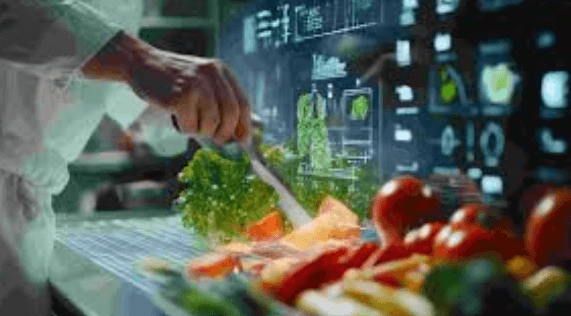
The future of food technology blends genetics, AI analytics, and sustainable farming to reshape production, processing, and personalization. Smart farming uses sensors and forecasts to enable real-time, autonomous decisions. Precision fermentation expands protein options with data-guided design. Integrated systems connect telemetry, climate models, and logistics to optimize resources and energy use. Interdisciplinary governance will balance consumer autonomy, environmental limits, and platform interoperability, leaving a persistent question about how much change is feasible before limits tighten.
What the Future of Food Technology Promises
The future of food technology promises to transform how foods are produced, processed, and personalized, leveraging advances in genetics, AI-driven analytics, and sustainable farming practices.
This trajectory emphasizes climate resilience and resilient supply chain automation, enabling better risk management, cost transparency, and rapid adaptation.
Interdisciplinary collaboration across agronomy, data science, and policy will guide responsible innovation that respects consumer autonomy and environmental limits.
How Smart Farming and AI Optimize Yields
Smart farming and AI-driven analytics are reshaping agricultural decision-making by translating sensor data, satellite imagery, and weather forecasts into actionable yield optimizations. The approach integrates biofeedback crops and edge analytics to monitor plant stress, irrigation, and nutrient needs in real time. Interdisciplinary collaboration advances predictive models, sensor networks, and autonomous interventions, enabling resilient, efficient, and freedom-friendly food production systems.
The Rise of Precision Fermentation and Novel Proteins
precision fermentation enables rapid iteration, novel proteins expand options, ai-guided design informs scoring, and sustainable resilience strengthens future food systems through smart farming collaboration.
Building a Sustainable, Resilient Food System With Tech
Integrating technology across supply chains enables a more resilient and sustainable food system by aligning data-driven insights with on-the-ground practices. Across disciplines, platforms synthesize telemetry, climate models, and logistics to optimize resource use.
Alternative energy integration powers cold chains and processing with lower emissions, while urban farming frontier pilots demonstrate scalable, local production.
The approach emphasizes interoperability, adaptability, and freedom to reimagine food value networks.
See also: The Future of Financial Technology
Frequently Asked Questions
What Are the Climate Impacts of Future Food Tech?
Future food tech could alter emissions and land use, with mixed signals across scenarios. It may improve climate resilience while reducing energy footprint through efficiency gains, alternative proteins, and circular systems, though demand growth and supply chains influence overall outcomes.
How Will Costs Affect Consumer Access to Innovations?
Costs will shape access to innovations, with consumer affordability rising as economies of scale and policy incentives suppress margins. Cost access metrics, price trajectories, and cross-disciplinary data suggest broadening adoption while monitoring equity and regional disparities.
Can Tech Replace Traditional Farming Jobs Entirely?
Automation myths foretell a future where robots fully replace fields, yet data shows partial replacement and labor displacement rather than total erasure. The analysis, interdisciplinary and forward-looking, highlights nuanced transitions, not absolute eradication, empowering farmers toward adaptable sustainability.
Are There Safety and Regulatory Hurdles for New Proteins?
Safety hurdles exist, but regulation pathways are evolving to accommodate innovative proteins. The analysis is forward-looking, data-driven, and interdisciplinary, addressing risks, transparency, and global alignment, while supporting an audience that desires freedom to innovate beyond conventional food systems.
How Will Data Privacy Shape Smart Farming Deployments?
Alliteration opens insight: data privacy shapes smart farming by defining access controls, governance, and transparency. The detached observer notes evolving standards, interoperable data ecosystems, and risk-aware deployments, guiding interdisciplinary, forward-looking adoption that respects farmer autonomy and consumer freedom.
Conclusion
The future of food technology points toward integrated, data-driven systems that harmonize genetics, AI analytics, and sustainable farming. Real-time sensor networks, climate models, and autonomous interventions promise higher yields with lower impact, while precision fermentation expands safe protein options. Interdisciplinary governance will guide ethical deployment, consumer autonomy, and interoperability. Like a well-tuned orchestra, the ecosystem should synchronize supply chains, energy use, and urban farming pilots to build a resilient, transparent food system for tomorrow.